Monday, March 6, 2017
Sunday, May 1, 2016
Iannis Xenakis, soundtrack for "Orient-Occident" (1960)

A recording of the Xenakis score/soundtrack is available at YouTube here.

Monday, May 25, 2015
Jasper Johns, "Painting with Two Balls"

Tuesday, May 5, 2015

Tuesday, April 7, 2015
fascism not confined to the Twilight Zone
Rod Serling's antifascist closing narration to the March 4, 1960, episode of "The Twilight Zone"—"The Monsters Are Due on Maple Street." http://bit.ly/1a2tS7z (audio)

Monday, March 9, 2015
Whitman, Williams, Oppen
George Oppen in a letter to William Carlos Williams, Summer 1960: "People who are afraid to talk won't produce much poetry. Tho Whitman has been no use to me. Perhaps arriving after you I don't need him. I always feel that that deluge and soup of words is a screen for the uncertainty of his own identity." (Selected Letters of George Oppen, ed. Rachel Blau DuPlessis, p. 39)
Sunday, March 1, 2015
the conservative's selection of Ez
Conservative publisher Henry Regnery put out a book of miscellaneous (and in some cases uncollected) essays on American civilization by Ezra Pound.

Wednesday, February 18, 2015
Jasper Johns, "Flashlight"


Jasper Johns, Flashlight (1960); cast 1980-81. Made of bronze and glass. (Philadelphia Museum of Art, February 2015, on loan from a collection of the artist.)
Thursday, February 12, 2015

Saturday, February 7, 2015
Hannah Weinstein's "The Four Just Men"
Hannah Weinstein, living and working in England since 1952 to avoid anticommunist blacklisting and possible congressional prosecution in the U.S., created a British television series aired in 39 episodes in late 1959 and 1960 called The Four Just Men. Someone has done us the favor of making 37 of the episodes available on YouTube here. One episode features the resurgence of fascism by way of a weekly magazine that has caused fights between the "Americans" and Puerto Ricans in a boys' club. Below is a screenshot of what Mr. Rivera, father of a boy who is stabbed in a scuffle with "Americans," reads in Garnes Weekly.

Thursday, February 5, 2015

Wednesday, January 28, 2015
Nam June Paik cuts off John Cage's tie
On October 6, 1960, at Mary Bauermeister's atelier in Cologne, while performing Etude for Pianoforte, shy young Nam June Paik suddenly and violently took a scissors and cut off John Cage's tie as Cage was sitting near the front of the audience.
Thursday, February 13, 2014
Pierre Joris on Paul Celan, with reference to "The Meridian"
New PennSound podcast: 20-minute excerpt of my discussion with Pierre Joris on Paul Celan's experience of the Shoah: https://jacket2.org/podcasts/pierre-joris-celan-and-shoah-20-minutes. Joris makes reference to his translation and edition of Celan's 1960 speech, "The Meridian."

Saturday, February 1, 2014

Wednesday, November 27, 2013

Sunday, January 6, 2013
Rauschenberg's piece for Duchamp, 1960

Robert Rauschenberg, "Trophy II (for Teeny and Marcel Duchamp)" - 1960.
From 1959 to 1962, Robert Rauschenberg created a series of "Trophies," highly personal combines dedicated to those artists who had most influenced him. In "Trophy II (for Teeny and Marcel Duchamp)," he repurposed a seven-panel white painting, inbuing it with vibrant color, aseemblage, and references to Duchamp and his wife, Teeny. The left-hand panel refers to Teeny with its inovcation of letters T and Y, while the right-hand panel is a stand-in for Duchamp and includes an aluminum sheet in an oblique reference to the reflective surface of The Large Glass.
The Walker Art Center in Minneapolis owns this 1960 piece. I saw it at the Rauschenberg/Cage/Duchamp/Cunningham show at the Philadelphia Museum of Art in late December 2012.

Sunday, December 30, 2012
Ashbery's poem "Europe"
From a letter Frank O'Hara wrote to Ashbery on July 14, 1960: "Europe is
carrying all before it, it is on everyone's lips and in their heads."
In an undated letter (from around 1960) Kenneth Koch wrote to Ashbery to say that of all the poems Ashbery was sending over from Paris, poems which were to form The Tennis Court Oath, "Europe" was the most influential. Koch desperately says of this piece, "I can't seem to do what you do. Huh! All I want to do is imitate you" (letter dated January 25, 1960).
On January 7, 1960, O'Hara says of the "long poem" ("Europe"): it is "the most striking thing since The Waste Land."
In an undated letter (from around 1960) Kenneth Koch wrote to Ashbery to say that of all the poems Ashbery was sending over from Paris, poems which were to form The Tennis Court Oath, "Europe" was the most influential. Koch desperately says of this piece, "I can't seem to do what you do. Huh! All I want to do is imitate you" (letter dated January 25, 1960).
On January 7, 1960, O'Hara says of the "long poem" ("Europe"): it is "the most striking thing since The Waste Land."
Tuesday, April 10, 2012
Wednesday, March 7, 2012

Tuesday, March 6, 2012
1960 materials at UbuWeb

FILMS
Iannis Xenakis, NEG-ALE (1960)
Cioni Carpi, Punto e contrapunto (1960)
Joseph Cornell, Gnir Rednow (1960)
Ed van der Eisken, Handen (1960)
Stan VanDerBeek, Achooo Mr. Kerrooschev (1960)
Stan VanDerBeek, The Smiling Workman (1960)
Stan VanDerBeek, Blacks and Whites, Days and Nights (1960)
Stan VanDerBeek, Skullduggery Part II (1960-1961)
Harry Smith, Heaven and Earth Magic (1950-1960)
Alexander Kluge, Brutality in Stone (1960)
Norman McLaren and Evelyn Lambart, Lines: Vertical (1960)
Richard Myers, The Path (1960)
Nobuhiko Obayashi, Dandanko (1960)
Nobuhiko Obayashi, E no Naka no Shouja (1960)
Ken Jacobs, Little Stabs at Happiness (1969)
TEXT
Gustav Metzger, Auto-Destructive Art Manifesto (1960)
Jose Lino Grunewald, aromamora; falo; sempre ceder (all 1960)
Friedrich Achleitner, o-i-study; ouch; alas! (all 1960)
John Cage, Tacet (1960)
Louis Zukofsky, Julia's Wild (1960)
Eugen Gomringer, The Poem as Functional Object (1960)
Luis Bunuel, A Statement (1960)
SOUND
Files in History of Electronic/Electroacoustic Music (1937-2001)
Berio, Luciano - "Momenti" (1960)
Clementi, Aldo - "Collage II" (1960)
Kagel, Maurizio - "Transicion I" (1958-1960)
Maderna, Bruno - "Dimensioni II (Invenzione su una Voce)" (1960)
Mathews, Max - "Numerology" (1960)
Nono, Luigi - "Omaggio a Emilio Vedova" (1960)
Pousseur, Henri - "Electre" (1960)
Xenakis, Iannis - "Orient-Occident" (1960)
Stockhausen, Karlheinz - "Kontakte" (1958-1960)
Brion Gysin, Mektoub: Recordings 1960-1981 Link
Salvador Dali, Salvador Dali Speaks
Richard Maxfield, Pastoral Symphony and Amazing Grace
William Carlos Williams, Interviews with Walter Sutton, Recorded October 11 & 20; November 3 & 15, 1960
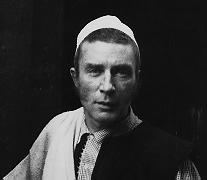
Above: early photograph of Ken Jacobs.
Subscribe to:
Posts (Atom)

 Is '60 the moment when the end of the end of the Old Left had been reached and the New Left began to emerge? Is it the final ascendancy, in certain scenes at least, of poetic postmodernity? Surely the publication of Donald Allen's The New American Poetry that year suggests this, but then again--once again--we look back on "New" here and see continuity. The rhetoric of the Kennedy-Nixon contest made much less of a dent than everyone (at the time as well as since) claimed, so one wonders why were such great claims made?
 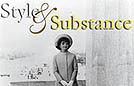 Had we come to expect "1960" to be truly ubiquitously modern in a way that the 1950s really were not--not quite? And what specifically does "modern" mean in the Kennedyesque talk then and now about the torch being passed to a new generation, etc.? The First Lady really meant "modernist" when Camelotians said "modern." What about the others across the new young cultural leadership? I've been surprised by how frequently the
  "Beat movement" was covered in 1960 in the mainstream press. I was expecting a fair measure but I've found tonnage. 1960 was the year when the figure of the beat was beginning to find acceptance, although still 80% of these stories are mocking, rebels-without-cause condescension. For anyone whose analysis made an impact nationally, do these antipolitical adolescents count as part of the "new young cultural leadership"? No, but rather than the two being opposites, they fall along a Continuum of the New American. Now that's a change for '60.