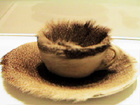
"Personism has nothing to do with philosophy, it’s all art."
That's Frank O'Hara, of course, in his partly ironic and party straightforward "Personism" manifesto. It's personal and impersonal, chatty and abstract. It creates its own I-do-this-I-do-that history. "It was founded by me after lunch with LeRoi Jones on August 27, 1959, a day in which I was in love with someone...."
How much mock manifesto is personism? Could it be merely the aesthetic ideology of the artist who was a "coterie" of people being...well...human beings - being the sort who found (that grandiose term) movements (more grandiosity) after lunch (a key O'Hara I-am-just-a-person moment) on a day in which he is in love (another set-piece O'Hara mood)?
O'Hara dated it September 5, 1959, and it was published as "Personism: A Manifesto" in Yugen #7, 1961. EXCERPT>>>
Thanks to David Slarskey.


 Is '60 the moment when the end of the end of the Old Left had been reached and the New Left began to emerge? Is it the final ascendancy, in certain scenes at least, of poetic postmodernity? Surely the publication of Donald Allen's The New American Poetry that year suggests this, but then again--once again--we look back on "New" here and see continuity. The rhetoric of the Kennedy-Nixon contest made much less of a dent than everyone (at the time as well as since) claimed, so one wonders why were such great claims made?
  Had we come to expect "1960" to be truly ubiquitously modern in a way that the 1950s really were not--not quite? And what specifically does "modern" mean in the Kennedyesque talk then and now about the torch being passed to a new generation, etc.? The First Lady really meant "modernist" when Camelotians said "modern." What about the others across the new young cultural leadership? I've been surprised by how frequently the
  "Beat movement" was covered in 1960 in the mainstream press. I was expecting a fair measure but I've found tonnage. 1960 was the year when the figure of the beat was beginning to find acceptance, although still 80% of these stories are mocking, rebels-without-cause condescension. For anyone whose analysis made an impact nationally, do these antipolitical adolescents count as part of the "new young cultural leadership"? No, but rather than the two being opposites, they fall along a Continuum of the New American. Now that's a change for '60.