Showing posts with label poetry. Show all posts
Showing posts with label poetry. Show all posts
Monday, December 13, 2010
1960 symposium recordings now available
Now available at PennSound:
* segmented audio recordings of Snelson on Cage, Kaufman on Guest, Perelman on Donald Allen, Nichols on Berkson/O'Hara, Silliman on Duncan, Goldman on Brooks, Funkhouser on Mac Low, Gallagher on Baraka, Hennessey on Daisy Aldan, DuPlessis on O'Hara, and Bernstein on Eigner;
* audio recording of the complete program (downloadable mp3)
* video recording of the complete program
Click on the video player above for (obviously) the video, or go here for links to the video and all audio: link.

Tuesday, December 7, 2010
1960 last night

 Bob Perelman presenting on Don Allen's "New American" anthology and Mel Nichols talking about the Bill Berkson/Frank O'Hara collaboration at the 1960 symposium last night at the Kelly Writers House. Stay tuned for video and audio recordings and, later, transcripts of the discussion and various essays in response.
Thursday, January 14, 2010
field = feel

The newest episode of PoemTalk (number 27 in the series) is a discussion of Robert Duncan's prologue-poem to The Opening of the Field (1960).
Friday, September 18, 2009
Zukofsky's home-made recording

The 22nd episode of PoemTalk is a discussion of a poem written in the 1940s but recorded, at home, onto a reel-to-reel player. Click here for program notes and a link to the discussion.
Sunday, May 10, 2009

Tuesday, December 30, 2008
spit out the truth
 The photo at left shows Hemingway with Fidel Castro in 1960. But for now let's talk about Hem's poems. Yes, poems.
Over the years there have been nine unauthorized editions of the poems. All or most of these editions contain 18 poems, which are most of the poems Hem wrote and published while he was living in Paris in the 1920s. The critical response to his verse is mostly based on the pirated editions, which are filled with errors.
One of these unauthorized editions was published by City Lights in San Francisco in 1960. It sold for 50 cents. We have not been able to find any reviews of this edition at all. (The edition of Hem's poems to consult is Nicholas Gerogiannis's Nebraska edition of 1992, 171 pages in length.) The City Lights book is 28 pages.
 The bio note in Poetry for January 1923 calls Hem "a young Chicago poet now abroad, who will soon issue his first book of poems." Edmund Wilson quipped that these "are not particularly important" but they do show the writer moving in the main poetic current of the time, at least very generally: what might be called precise yet poignant discernment.
He tried to spit out the truth;
Dry-mouthed at first,
He drooled and slobbred in the end;
Truth dribbling his chin.
Seems like a bad page in a Nick Adams story, lineated.
Saturday, December 20, 2008
reel-to-reel Zukofsky
 On November 3, 1960, Louis Zukofsky turned on his reel-to-reel recorder and made a tape of himself reading 40 poems, and then sent it off to the Library of Congress. Where it sat for many years in their audio collection. Well, sat is not quite fair. Probably some researchers ventured into the archive there and listened. But then PennSound got permission from Zukofsky's executor, Paul Zukofsky, to put the poet's recordings of his poems online. Above you see just the poems he read that day from Some Time. There is much more, so have a look and listen.
 This morning I blogged about an extra poem I heard embedded in there. Go here to find out more about that bonus track.
Friday, December 19, 2008
Yahweh's tautology cycled through
 I am that I am. Am I? Am that. I am. I am. That I am. I am that I am. I am that I'm I. Am I I that I am? Am I? That I am I am. That am I am I. I I that am am. Am that. I am. Am I that I am? I am I that. I am I am that. Am that I am I. And that I. Etc. This is Brion Gysin performing "I Am" in 1960. Thanks to Danny Snelson and Ubuweb. Now have a listen.
Friday, December 5, 2008
first book
 In the photo: poet Barbara Guest in 1960. That year Guest published her first book of poems, The Location of Things (Tibor de Nagy).
Friday, November 14, 2008
off the road in Long Island

Kerouac resided in Northport, L.I., from 1958 to 1964. George Harris went there last year with a video camera and gives us a 5-minute video tour of the two with a Jack p.o.v. Go here for more info and links.
Wednesday, July 16, 2008
boomlay-booming after modernism
 Late in ’59, Eleanor Ruggles’ biography of Vachel Lindsay was published and there was briefly a revival of interest – most of it doubtful – in Lindsay as a chanting performing poet. Two other biographical books had been published, a first by Edgar Lee Masters in 1935, a second in ’52, a fictionalized biography, by a then-young Mark Harris.
This new book brought out Kenneth Rexroth and Granville Hicks, veterans by then of the political-poetry wars. Rexroth had not much good to say about where Lindsay fit: naively American, a dreamer of the (false) American Dream. Today, Rexroth guessed, Lindsay would be a “mildly rightish liberal, a common-sense New Dealer,” essentially a patriotic Midwestern populist, “hopelessly naïve.” The poetry had been “not very good.”
For Hicks, Lindsay stood against – or ran differently from or parallel to – modern poetry. “He was enthusiastic and hopeful; the moderns are secretive and dark.” Yet Harriet Monroe published him in 1913, and Yeats deemed him “the great native American genius.” When Monroe printed VL’s poem about the Salvation Army’s General Booth (“General Booth Enters into Heaven”) in Poetry she made sure to include the parenthetical instructions for bass drum, banjo, flute, etc., that made it a poem with a difference: one meant to be chanted, sung, performed.
In ’59 he was “eccentric and faintly embarrassing.” He’d literally walked around the Northwest in the first years of the 20th century, provisioned with a pack of poems and no money. He traded poems and talk for food, and announced to astonished citizens of small towns in Oregon and Washington State that “I am the sole active member of the ancient brotherhood of the troubadours.” In the non-Poundian sense of the term, he might have been right at that moment.
Lindsay made performance poetry – poetry printed as a score for chanted performance – something Rotary Clubs and high-school assembly attendees knew as part of the modern American poetic landscape. It’s NOT that – as Time mag put it in its November 23, 1959 issue – Vachel Lindsay was out of date and that “chanting about the heartland seemed naïve to readers caught by the puzzles of The Waste Land.” No. The trick would be whether we could ever – in light of these dismissals at the end of the 50s – see that the Eliotic collaged dramatic monologues and snatches of ritual on the one hand and the boomlay-booming scored chants of another Midwesterner were actually part of the same movement.
The Vachel Lindsay PennSound page has a few crucial recordings, including "The Congo" and one of my favorites, "The Mysterious Cat."
sources: Rexroth in The Nation, Nov 28, 1959, p. 404; Hicks in Saturday Review Nov 21, 1959, p. 39. Ruggles’ bio is called The West-Going Heart (Norton).
Sunday, July 6, 2008
nude descending toward formalism
 We've seen poet X. J. Kennedy around (at Breadloaf). In '60 he published a satire of modernism, a poem titled "Nude Descending a Staircase" after--of course--the 1912 Marcel Duchamp painting that by '60 had become iconic of the cubist and futurist side of the revolution in art. The Duchamp painting, shown at the 1913 Armory Show, depicted the motion of a nude woman by presenting her as successive superimposed images, similar to stroboscopic motion photography. In 1913 this was scandalous.
 How do we know X. J. Kennedy's poem of 1960 satirizes the Duchamp? Well, would a sincere homage be given in perfectly rhymed ABCB tetrameter quatrains? (Tetrameter with internal rhyme too: "Toe upon toe, a snowing flesh, / A gold of lemon, root and rind") Duchamp's was a form-busting breakthrough, characterized by energy. Kennedy in '60 counters with lines of stasis about the woman's movement: "One-woman waterfall, she wears / Her slow descent like a long cape / And pausing, on the final stair / Collects her motions into shape." In other words, the poem has found her at a certain moment of descent. She collects motions into shape.
There's a condescending pun here: For Kennedy the nude Duchampian woman has "nothing on"... that is to say, nothing on her mind. Empty-headed, stupid or, at best: she is the opposite of the creator of her movement--the object of the modernist subject. And to be sure she's an object, the poet of '60 looks up at her, standing beneath the banister, watching from below as her thighs thresh.
The multiplicity of places from which to observe (all at once - famously, the revolution Duchamp augured here) has become a single p.o.v., and satirically gendered ("we" are gaping at the body, nude upskirt). If Kennedy meant to praise kinetic modernism, then he created a major formal irony in doing so, and completely undoes the aesthetic of the "one-woman waterfall" he sets in stiff rhyming lines.
Toe upon toe, a snowing flesh,
A gold of lemon, root and rind,
She sifts in sunlight down the stairs
With nothing on. Nor on her mind.
We spy beneath the banister
A constant thresh of thigh on thigh--
Her lips imprint the swinging air
That parts to her parts go by.
One-woman waterfall, she wears
Her slow descent like a long cape
And pausing, on the final stair
Collects her motions into shape.
Monday, May 19, 2008
poem to conquered land: I lay claim to wonder
 John Tagliabue published this poem in the August 1960 issue of Poetry magazine. It's our 1960 version of Wallace Stevens's "Anecdote of the Jar." The poem (shaped like a flag, or a boat with a mast) plants its alphabetic flag on American soil and takes dominion everywhere, and, depending on the valuation of the simile, is ironically or not ironically a direct descendent of Columbus's hegemonic gesture. The imagination rules, and brings over a load of bric-a-brac from elsewhere (this poem itself). Poetics is inherently (theoretically and perhaps hilariously) colonialism.
Thursday, April 3, 2008
upbeat and tough at Cosmo
In August '60 Cosmopolitan ran an essay by Richard Gehman called "The Language of Love." Poetry is back in America...because American readers are realizing that it's about robust human passion.
"It is only in recent years that Americans in mass have become aware of the vitality of this form of literature and of the rewards it has to offer them." Previously poetry was being "poorly taught, taught by rote, or taught with emphasis on scholarship and research rather than on emotion and appreciation."
Fortunately the "prototype" of the "dreamy-eyed aesthete with golden curls" is dead. It "had only a short life in an excessively effete era."
"Never forget that Shelley was six feet tall"! And that Ted Roethke "once worked in a pickle factory."
Americans "prefer robust and virile heroes" and thus poets should be "elevated...to eminence."
And what about Eliot? A whimp? A Girly Man? A solitary, weak-stomached fellow who "pine[s] for inspiration"? Naw. Gehman here celebrates an anecdote he'd recently heard about T. S. Eliot: the poet, at dinner at his London club, gamely eats "game pie...full of beaks and shot, or a cut off the joint and two veg," and then after dinner roughly grabs a hunk of cheese the size "of a baby's head," stabbing with a knife the whole piece and then eats "the whole goddmaned thing." Thus proving...what? That Eliot is one of those "robust and virile" men who should affirm Americans' emergent view of American poets as regular good-guy American heroes whose stature and rough experience enable them to emote in regular good-guy ways.
And let's not forget Irving Layton (never mind that he's Canadian). After all, Layton is a "towering man" who "once shoveled coal" and fought "bare-knuckled every day" as a kid and--this really gives him credentials--refused to mourn his lousy father.
Bizarrely (and without transition) Allen Ginsberg joins this list of normative strapping real-guy poets: after all, he's so passionately into reading his poetry that sometimes he strips off his shirt, showing bare chest (hairy chest, doubltess is the implication).
"Hard" is the word here. Poets are hard folks. Poems are hardy expressions of human emotion. Powerful and hard. And...here's the key point..."true poetry is hard work."
And hard American work in support of the poet fits here as well. After all, isn't it true that "publicity sells poetry"?
America, the poets (and Madison Avenue ad men) are putting their virile shoulders to the wheel!
"It is only in recent years that Americans in mass have become aware of the vitality of this form of literature and of the rewards it has to offer them." Previously poetry was being "poorly taught, taught by rote, or taught with emphasis on scholarship and research rather than on emotion and appreciation."
Fortunately the "prototype" of the "dreamy-eyed aesthete with golden curls" is dead. It "had only a short life in an excessively effete era."
"Never forget that Shelley was six feet tall"! And that Ted Roethke "once worked in a pickle factory."
Americans "prefer robust and virile heroes" and thus poets should be "elevated...to eminence."
And what about Eliot? A whimp? A Girly Man? A solitary, weak-stomached fellow who "pine[s] for inspiration"? Naw. Gehman here celebrates an anecdote he'd recently heard about T. S. Eliot: the poet, at dinner at his London club, gamely eats "game pie...full of beaks and shot, or a cut off the joint and two veg," and then after dinner roughly grabs a hunk of cheese the size "of a baby's head," stabbing with a knife the whole piece and then eats "the whole goddmaned thing." Thus proving...what? That Eliot is one of those "robust and virile" men who should affirm Americans' emergent view of American poets as regular good-guy American heroes whose stature and rough experience enable them to emote in regular good-guy ways.
And let's not forget Irving Layton (never mind that he's Canadian). After all, Layton is a "towering man" who "once shoveled coal" and fought "bare-knuckled every day" as a kid and--this really gives him credentials--refused to mourn his lousy father.
Bizarrely (and without transition) Allen Ginsberg joins this list of normative strapping real-guy poets: after all, he's so passionately into reading his poetry that sometimes he strips off his shirt, showing bare chest (hairy chest, doubltess is the implication).
"Hard" is the word here. Poets are hard folks. Poems are hardy expressions of human emotion. Powerful and hard. And...here's the key point..."true poetry is hard work."
And hard American work in support of the poet fits here as well. After all, isn't it true that "publicity sells poetry"?
America, the poets (and Madison Avenue ad men) are putting their virile shoulders to the wheel!
Saturday, March 15, 2008
didactic poem not a poem
 A more or less randomly chosen academic book from 1960: Gordon E. Bigelow's Rhetoric and American poetry of the early national period, published by the University of Florida Press - a 77-page monograph, number 4 in Florida's "Humanities" series. "During msot of Western literary history," Bigelow begins, "rhetoric and poetic [sic] have lain close together, sometimes merging so completely for centuries at a time as to be virtually indistinguishable" ... but not so in America. Although there was much rhetoric written especially for political conversation, writers of the early U.S. did not have the willingness to devote themselves to writing poetry because (primarily) British writers were their competition. Poetry that was written in the early U.S. was done mostly to excite narrowly targeted audiences specifically for political or religious events of the day. American poetry began by being "vigorous" yet "dull" and makes "dull reading today." The poet's "words fall to the ground before they reach our ears." "The urgency which gave his poetry its life" back then is "gone" now.
Bigelow is tentative about opining but (especially in his fifth section, "Propaganda and Declamation") his view is readable between the lines: partisan poetry is not poetry because it is not for the ages, it is not universal. There's a definitional problem here, and once one sees that the historical argument goes in a circle. He begins by defining poetry as not rhetoric, argues that the early U.S. poet is rhetorical, and ends by saying that the poetry produced was not poetry. There is no such thing as a didactic poem that deserves the name of "poem."
Friday, February 15, 2008
a valentine from Marianne
 Marianne Moore published more often in New Yorker than I would have guessed. Several times in '60. On February 13, we see her poem "St. Valentine," (yes the comma is in the title) and it begins with one of her patent run-ons from the title:
St. Valentine,
permitted to assist you, let me see...
And the final stanza is this:
Verse--unabashedly bold--is appropriate;
   and always it should be as neat
as the most careful writers "8."
   Any valentine that is written
Is as the vendange to the vine.
   Might verse not best confused itself with fate?
Moore published O to Be a Dragon in '59 and it was reviewed widely in '60. She also wrote a big-splash article for Vogue called "The Plums of Curiosity," a curious piece itself. More on that another time.
Saturday, January 19, 2008
that tell-tale negligent slouch
 Late '59, and the super-famous literary journalist Malcolm Cowley (ex-expatriate, ex-radical, now household name among readers of the centrist-liberal literary weeklies such as The New Republic) was obviously working on Whitman. His three-page essay about Whitman published in the October 26, 1959 issue of TNR seems to be a chip off the workbench - something that came to him from another larger project. (That larger project was an introduction he wrote for a 1959 edition of Leaves of Grass.)
Even all those years ago, a slick literary weekly is not just going to publish an essay on Whitman's developing system of philosophy - I mean, an essay that is not a review and not hitched to some more relevant matter.
That is why, I think, Cowley adapted his piece about Whitman's philosophical ideas so that it's main point, seemingly, was that Whitman is a beatnik. Perhaps I found this interesting to read, then, only (1) in context of its original publication and (2) as a way of disclosing conventions of literary journalism.
It's a literary essay trying rather desperately and stupidly/superficially for a wider audience than one would get in 1960 by publishing in American Quarterly or American Literature. But now, for all time, we can say that people at the end of the 50s thought of Whitman as a forerunner of the beats on the basis of facts such as that both Walt and the beatnik walked with a "negligent slouch."
 But it turns out that "Whitman's beatnik period...proved to be only a transitory phase of a life that had several other phases." So there's cake and eating it too. Whitman is a beat (EXTRA! EXTRA! READ ALL ABOUT IT!) but he's really not (we wouldn't want to be a slave to fashion).
So, follow me here: Whitman is a beatnik. Read on. But, well, no he's not. And in fact Whitman (and thus the beats) do all these extra-poetic antics to cover over the fact that the writing is bad. This is why someone like Kenneth Patchen sets his poetry to music - so that the music will drown out the poems' flaws; hence (still following?) since Whitman was like a beat, one can imagine Whitman needing a loud band to play while one hears his verse too, similarly hiding its failure as verse.
Cowley's piece was called "The Guru, the Beatnik and the Good Gray Poet." Here's a portion:
There were...literary men who described their meetings with Whitman in a tone of fascinated horror that suggests that accounts of present-day visitors to North Beach or Venice West. Indeed one cannot help feeling that the Whitman of those days was a predecessor of the beatniks. He had the beard, the untrimmed hair, the negligent slouch.... His costume...was another defiance of convention that might be regarded as the 1960 equivalent of sweatshirt and sandals.... He stayed out of the rat race, he avoided the squares, preferring the company of omnibus drivers and deckhands on the ferries; he was "real gone," he was "far out"; and he was writing poems in what Lawrence Lipton calls "the 'open,' free-swinging style that is prized in Beat Generation literature." "Whitman must have thought he was Kenneth Patchen," Lloyd Frankenberg said of those particular poems. Some of them should be read to loud music as a means of glossing over their faults and holding the listener's attention - not to the music of a jazz combo but perhaps to that of a regimental brass band.
Cowley also published on Whitman in the October 31, 1959 issue of the Saturday Review. This seems to be right out of the introduction he wrote for the above-mentioned new edition.
Monday, January 14, 2008
Gordon Parks chooses Robinson Jeffers
The February 15 issue of Life did a photo spread on modern and contemporary American poetry. To kick off National Library Week, Life commissioned Gordon Parks to celebration "the nationwide poetry boon." Parks chose some favorite poems and took photographs to go along with them, "conveying their themes with his camera." The subtitle of the spread: "Captured by the camera: haunting loveliness based on modern verse." The poets selected: John Peale Bishop, Millay, MacLeish, Frost, WCW ("The Red Wheelbarrow"), Jeffers, Richard Wilbur, Eliot, Crane. In the caption for Williams: "...writes extremely conversational verse." Eliot: "...the most influential of all contemporary poets...also one of the most complex." Crane: "...a highly neurotic genius."
 Parks was the first African American to work at Life. He co-founded Essence. His semi-autobiographical The Learning Tree would come out four years later, in '64, as would his film Flavio. He was an early contributor to the blaxploitation genre, and his son, Gordon Jr., directed Superfly. Again Life's intro to this "Kaleidoscope" notes that Parks chose the poems; already a main interest was race in America, yet none of the poems even hints at race or even really gestures toward the politics to which Parks would be so devoted. Perhaps this was all thematically truly before, for instance, he created a photo essay documenting the Selma to Montgomery march for Life (1963). At right, though, is a photo of Langston Hughes Park took in 1941; he apparently did not choose a Hughes poem for this spread.
In any case, Life is ecstatic about poetry's comeback: "Recordings of poems have rung up sales of more than two million albums. Poets are barnstorming the country, to recite their works before sellout audiences. In nightclubs and coffee houses, declaiming poetry is the rage, with out without musical accompaniment."
 Parks was the first African American to work at Life. He co-founded Essence. His semi-autobiographical The Learning Tree would come out four years later, in '64, as would his film Flavio. He was an early contributor to the blaxploitation genre, and his son, Gordon Jr., directed Superfly. Again Life's intro to this "Kaleidoscope" notes that Parks chose the poems; already a main interest was race in America, yet none of the poems even hints at race or even really gestures toward the politics to which Parks would be so devoted. Perhaps this was all thematically truly before, for instance, he created a photo essay documenting the Selma to Montgomery march for Life (1963). At right, though, is a photo of Langston Hughes Park took in 1941; he apparently did not choose a Hughes poem for this spread.
 In any case, Life is ecstatic about poetry's comeback: "Recordings of poems have rung up sales of more than two million albums. Poets are barnstorming the country, to recite their works before sellout audiences. In nightclubs and coffee houses, declaiming poetry is the rage, with out without musical accompaniment."
Wednesday, December 26, 2007
founded after lunch
 "Personism has nothing to do with philosophy, it’s all art."
That's Frank O'Hara, of course, in his partly ironic and party straightforward "Personism" manifesto. It's personal and impersonal, chatty and abstract. It creates its own I-do-this-I-do-that history. "It was founded by me after lunch with LeRoi Jones on August 27, 1959, a day in which I was in love with someone...."
How much mock manifesto is personism? Could it be merely the aesthetic ideology of the artist who was a "coterie" of people being...well...human beings - being the sort who found (that grandiose term) movements (more grandiosity) after lunch (a key O'Hara I-am-just-a-person moment) on a day in which he is in love (another set-piece O'Hara mood)?
O'Hara dated it September 5, 1959, and it was published as "Personism: A Manifesto" in Yugen #7, 1961. EXCERPT>>>
Thanks to David Slarskey.
Saturday, December 22, 2007
Berkeley Review, late 1950s
 The folks who launched in the Berkeley Review did so with a bold new moderation, proudly calling themselves one-eyed poets. MORE>>>
Subscribe to:
Posts (Atom)

 Is '60 the moment when the end of the end of the Old Left had been reached and the New Left began to emerge? Is it the final ascendancy, in certain scenes at least, of poetic postmodernity? Surely the publication of Donald Allen's The New American Poetry that year suggests this, but then again--once again--we look back on "New" here and see continuity. The rhetoric of the Kennedy-Nixon contest made much less of a dent than everyone (at the time as well as since) claimed, so one wonders why were such great claims made?
 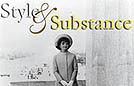 Had we come to expect "1960" to be truly ubiquitously modern in a way that the 1950s really were not--not quite? And what specifically does "modern" mean in the Kennedyesque talk then and now about the torch being passed to a new generation, etc.? The First Lady really meant "modernist" when Camelotians said "modern." What about the others across the new young cultural leadership? I've been surprised by how frequently the
  "Beat movement" was covered in 1960 in the mainstream press. I was expecting a fair measure but I've found tonnage. 1960 was the year when the figure of the beat was beginning to find acceptance, although still 80% of these stories are mocking, rebels-without-cause condescension. For anyone whose analysis made an impact nationally, do these antipolitical adolescents count as part of the "new young cultural leadership"? No, but rather than the two being opposites, they fall along a Continuum of the New American. Now that's a change for '60.