Donald Hall interviewed Ezra Pound in Italy in 1960. After editing and much backing and forthing with Ez, Hall published it in 1962. The Paris Review has now made the entire interview available as a PDF.
Showing posts with label Ezra Pound. Show all posts
Showing posts with label Ezra Pound. Show all posts
Friday, October 30, 2009
Donald Hall matriculates into Ezraversity
Donald Hall interviewed Ezra Pound in Italy in 1960. After editing and much backing and forthing with Ez, Hall published it in 1962. The Paris Review has now made the entire interview available as a PDF.

Saturday, March 14, 2009
Pound as a central image
 Hugh Kenner's The Pound Era, which reshaped the discussion of Pound in the 1970s, and in some ways re-ignited the debates about Pound's politics (because, for Kenner, Pound's fascism by no means mooted his poetic centrality), was published in 1973. Not knowing much about Kenner's earlier work, I'd always assumed it was written in the late 60s and early 70s; such a big book surely took a while to make.
Yesterday I spent the day reading around in the Poetry magazine papers at the University of Chicago and read Kenner's correspondence with Poetry editor Henry Rago in the years 1957, '58, '59, '60. And in a letter to Rago dated 1960, Kenner told Rago, "I plan a Great Book" which will use Pound's "career as a central image," etc. etc. There you go. Kenner first conceived of The Pound Era in 1960.
In one sense, the Pound era is 1960-71. Kenner was incensed by Richard Ellman's biography of Joyce, which was also published in 1960. His book on Pound is in part a corrective.
Monday, November 26, 2007
the virus of modernism
I've been reading all of the letters readers sent to the editor of the New York Times Book Review after Karl Shapiro's "What's the Matter with Poetry?" appeared. (I wrote recently about Shapiro's scattershot jeremiad.)
Among the letters was this one from Ethel Tolbach of New York:
TO THE EDITOR: After adolescence, this is no time when modern poetry cannot be seen for the fraud it is. Recently a friend told me that William Carlos Williams was an exception. To my horror I found his poetry full of anti-democratic ideas, anti-Semitism, anti-Negro sentiments--the very symptoms of the virus of "modernism" which Mr. Shapiro discusses.*
 Actually this is about the one thing Shapiro did not discuss (nothing Shapiro said could have led directly to this woman's complaint). Poor WCW. In this period he was often attacked for being pink, radical, commie--too democratic, too inclusive (think Paterson)...and here, also, of the opposite.
I'm guessing that the charge of anti-Semitism is guilt by association with Pound, an infection spread by the "disease" (Shapiro's word) of modernism.
The odd double negative of the first sentence of this letter is of interest. It befits the antimodernist laments of the period 1945-60: concerns raised about modernism's pernicious influence are said to be urgent, but no alternative (except typically a return to what poetically there was before) is offered. So we don't say that 1960 is a time when we should do such-and-such new or different in poetry. We say it's not a time when we should not disclose failures and betrayals.
* NYT, Jan 10, 1960, p. 32.
Among the letters was this one from Ethel Tolbach of New York:
TO THE EDITOR: After adolescence, this is no time when modern poetry cannot be seen for the fraud it is. Recently a friend told me that William Carlos Williams was an exception. To my horror I found his poetry full of anti-democratic ideas, anti-Semitism, anti-Negro sentiments--the very symptoms of the virus of "modernism" which Mr. Shapiro discusses.*
 Actually this is about the one thing Shapiro did not discuss (nothing Shapiro said could have led directly to this woman's complaint). Poor WCW. In this period he was often attacked for being pink, radical, commie--too democratic, too inclusive (think Paterson)...and here, also, of the opposite.
 I'm guessing that the charge of anti-Semitism is guilt by association with Pound, an infection spread by the "disease" (Shapiro's word) of modernism.
The odd double negative of the first sentence of this letter is of interest. It befits the antimodernist laments of the period 1945-60: concerns raised about modernism's pernicious influence are said to be urgent, but no alternative (except typically a return to what poetically there was before) is offered. So we don't say that 1960 is a time when we should do such-and-such new or different in poetry. We say it's not a time when we should not disclose failures and betrayals.
* NYT, Jan 10, 1960, p. 32.
Tuesday, October 16, 2007
the Confucian side of Disney
 Early in 1960 the young poet Donald Hall managed to interview Pound in Italy. Harry Meacham had recommended Hall to Pound, and the old tired poet knew that Hall had recently interviewed Eliot. Hall found that Pound's eyes were watery, red, showed fatigue. Pound said, on greeting the young poet (I think Hall put this in a poem): "You -- find me -- in fragements." During three days of interviews (add a fourth day, the first, when they met and spoke for an hour), Pound's voice was theatrical and stayed high in each sentence until the very end, when it fell. He had bursts of energy, even paced the room, until suddenly his faced sagged and he felt flat, eyes glassy, out of it. After one callapse, Pound recovered a bit and begged Hall: "Don't -- let me sound -- so tired."
Yes, this was in 1960. When finally Hall published an edited version of the interview in Paris Review, it was already '62.
Hall: It must be thirty or thirty-five years since you have written any poetry outside the Cantos, except for the Alfred Venison poems. Why is this?
Pound: I got to the point where apart from an occasional lighter impulse, what I had to say fitted the general scheme.
H: Do you think that the modern world has changed the ways in which poetry can be written?
P: There is a lot of competition that never was there before. Take the serious side of Disney, the Confucian side of Disney....
H: Did anyone ever help you with your work? ...I mean by criticism and cutting.
P: Apart from Fordie [Ford Madox Ford], rolling on the floor undecorously and holding his head in his hands, and groaning on one occasion, I don't think anybody helped me through my manuscripts. Ford's stuff appeared too loose then, but he led the right against tertiary archaisms.
H: How did you get started being a poet?
P: My grandfather on one side used to correspond with the local bank President in verse....
H: Can a man of the wrong [political] party use language efficiently?
P: Yes. That's the whole trouble! A gun is just as good, no matter who shoots it.
John Tytell, The Solitary Volcano, pp. 333 ff.; Paris Review #28, pp. 22- .
Saturday, October 6, 2007
Weldon Crusoe
 I've mentioned that The Collected Poems of Weldon Kees was published in 1960. When the narrator of Kees' poems is in the third person, he is sometimes given a name - Robinson, whom Kenneth Rexroth described as "modern man at the end of his rope."
 Rexroth (in his review of the book, published in the New York Times on January 8, 1961) added that Kees is only distinguishable from this Robinson by his (Kees') pity. And then, to make things clear: Kees is "Robinson Crusoe, utterly alone on Madison Avenue, a stranger and afraid in the world of high-paying news weeklies, fashionable galleries...high-brow movies," etc.
In 1956, in a letter, Rexroth observed of his friend Kees, that while others "have called themselves Apocalyptics, Kees lived in a permanent and hopeless apocalypse."
Kees worked for a while at Time magazine, where his boss was Whittaker Chambers.
Kees went with Elizabeth Bishop to visit Ezra Pound at St. Elizabeth's hospital in Washington, DC.
Mark Ford wrote in 2004 that Kees "radiated something Bartlebyish." "Why don't you want to be a success?" Truman Capote asked Kees at a party in 1948 (and one can well imagine Capote's tone in asking this).
From a late poem:
If this room is our world, then let
This world be damned.
Subscribe to:
Posts (Atom)

 Is '60 the moment when the end of the end of the Old Left had been reached and the New Left began to emerge? Is it the final ascendancy, in certain scenes at least, of poetic postmodernity? Surely the publication of Donald Allen's The New American Poetry that year suggests this, but then again--once again--we look back on "New" here and see continuity. The rhetoric of the Kennedy-Nixon contest made much less of a dent than everyone (at the time as well as since) claimed, so one wonders why were such great claims made?
 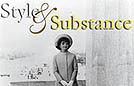 Had we come to expect "1960" to be truly ubiquitously modern in a way that the 1950s really were not--not quite? And what specifically does "modern" mean in the Kennedyesque talk then and now about the torch being passed to a new generation, etc.? The First Lady really meant "modernist" when Camelotians said "modern." What about the others across the new young cultural leadership? I've been surprised by how frequently the
  "Beat movement" was covered in 1960 in the mainstream press. I was expecting a fair measure but I've found tonnage. 1960 was the year when the figure of the beat was beginning to find acceptance, although still 80% of these stories are mocking, rebels-without-cause condescension. For anyone whose analysis made an impact nationally, do these antipolitical adolescents count as part of the "new young cultural leadership"? No, but rather than the two being opposites, they fall along a Continuum of the New American. Now that's a change for '60.