In a recent essay for the New York Times, Oscar Robertson remembers the 1960 U.S. Olympic basketball team as a turning point in the sport--the last truly great amateur team.

 Yves Klein, "Leap into the Void" (1960). Le Saut dans le vide. The photograph served as the cover for Architecture de l'air (Air Architecture), published in 1961. This print I saw at the Yves Klein show at the National Gallery just yesterday; it was borrowed from the Collection Museum of Contemporary Art in Tokyo. How ever did Klein pose this shot?
 Penn in 1960. Women at Penn then were part of the so-called College for Women. The now legendary dean of that segregated set-up was Jean Brownlee. I joined the faculty at Penn in 1985 (25 years ago this year) and found the rhetoric used to mention Brownlee--when she was by then mentioned at all--was mythic. I have always thought of her as supportive of the young women in the school and presumed she was quietly advocating for curricular and other forms of integration within the core of Penn life (centered on the men). But here is an informal account of one member of the class of 1960 - the two times this friend met Brownlee. Perhaps it's not at all representative but it does strike me as suggestive:
I only actually spoke to Dean Brownlee (of the College for Women) twice: once when I met with her to ask whether I could take a joint degree in English in the college and Finance or Economics in the Wharton School (she was about as nasty about me having already made a choice as anyone could have been); and then again when we were practicing law in Hartford in about 1964, at a reception for Penn alumnae at a Dr. Pepper's old mansion on the edge of Elizabeth Park, when as I walked out the door she told me how lucky I was as a female graduate to have been invited. So I shouldn't have been surprised, although I was, to learn that at opening day for the College for Women she told the assemblage of freshmen that Penn was committed to the Education of Women and that although of course they would never do anything with their educations she hoped it would make them better mothers. Better to have had my experience where the boys moved when two of us sat down in Dietrich Hall [in the Wharton School].A student who arrived at Penn in 1966 responded:
I came to know Jean Brownlee quite well as both an undergraduate and an alum (we lived in the same apartment building). We spent many enjoyable dinners together over the years. In all the time I knew her (I matriculated in 1966), she was very supportive of women. I don't think she could conceive of total equality (and, let's face it, it hasn't happened yet), but for a woman of her generation--who did become a Ph.D and a powerful force at Penn--she was all for women being able to do whatever they wanted to do. In fact, she wrote my letter of recommendation when I applied for my MBA at the Wharton School. Jean did have an abrupt way of speaking. She was a no-nonsense person. I remember her telling me about her "chat" with Candice Bergen, who was cutting a lot of classes to model in NY. "I told her, be a Penn student or be a model. You can't do both," she said. Bergen chose modeling.Our Class of 1960 friend responds:
Who knows how differently we would interpret events if we knew then what we know now. For many diverse reasons (among them an invalid mother), I was hell bent on attaining a situation where I could be independent and live my life on my own terms (as if anyone can) as part of the "real" world, not stuck away in a house all day. And I was very naive and very quiet and shy with thick glasses, not much of a presence or a communicator. Economics and particularly finance were interesting, but I wanted to study them for a purpose, really literature, philosophy and sociology were what I cared about and studied in my spare time whenever I could. That said I still treasure every little thing I learned in the Wharton School. It's been useful in many different ways. Since I was exposed to undisguised gender-based discriminatory behavior on a pretty constant daily basis I was more sensitive to it than the girls in the College would have been.
Anyhow, after a quick look online, I see that Dean Brownlee didn't really have much authority at that time. She wasn't even the real dean although as I remember she was considered to be in charge. She had no jurisdiction over me since I was in Wharton and I knew next to nothing about her. I was probably the only person who ever asked her if I could get degrees from two different schools at the same time (I did offer to stay at Penn longer if that was what was required).The lecture she gave about making my choice must have been her stock lecture since it sounds very similar to what she reportedly said to Candace Bergen. I couldn't feel any connection to her at all and I was really hurt - she treated me as if I had done something wrong and neeed disciplining. And I was irritated when she said that as a woman I should be so grateful to have been invited to the reception. She probably just meant (innocently from her perspective) that there had been progress in that area at Penn. I certainly wasn't perfect and was probably too quick to make a judgement.
Nevertheless, in her position, she should have had some inkling of social change in the offing. She must been able to imagine equality for herself - it wasn't that much later that she started teaching political science in the Wharton School. I can't imagine that the Dean of Women at Wellesley or Smith or Bryn Mawr would have told Freshmen girls that she knew they would never use their educations but hoped that the education would make them better mothers (that's what Brownlee reportedly said). By 1966 (the blogger's graduation date), Gloria Steinhem's book had at least raised consciousness levels and I think that Dean Brownlee was teaching in the Wharton School.
As far as having to make a choice - not being able to do two things at once\ diversity diminishing education - is ridiculous and short sighted. We had Gene Scott and Donald Dell at UVA Law School when I was there and they managed (with help and concessions of course) to play on the Davis Cup tennis team in their 2nd year. If that's all there was to Candace Bergen's situation, it would have been more productive to try to figure out a way that she could do both things. I left that room with the clear conviction that it would not make sense to study the humanities at Penn, I would have to transfer to a place that could provide a much better education than the College for Women was making available.
 The earliest-dated item from the recent Wallace Berman show, Fall 2009-January 2010. It is untitled and dated 1960: a collaged mailer with a photograph of Shirley Berman. (The photo was taken by Wallace.) The whole thing measures 6 x 2.5 inches.
 This is the photograph featured on the first page of a long article about the Beats written by Paul O'Neil for the November 30, 1959 issue of Life. Carefully posed squalor.
 On October 22, 1960, Paul Celan gave a speech in Darmstadt, Germany, on the occasion of receiving the Georg Buchner Prize. Here is the text of that speech--called "The Meridian"--as translated by Rosemarie Waldrop.

 In 1960 Robert Grenier was not quite yet a student of Robert Lowell at Harvard. But Grenier was at Harvard and in my recent interview with him, we talked a good deal about the period 1959-61. Click here for more and for a link to the audio recording of the interview.

 In the photo: Mario Ellis Hill performs Bob Kaufman's Does the Secret Mind Whisper? A series of YouTube videos capture various poets honoring Kaufman's legend.
 Wallace Berman took this photograph of his son Tosh in 1960. Silver gelatin print; taken in 1960, printed in 2006. h: 20 x w: 16 in. In an interview with Tosh:
3:AM: It would be remiss of me not to mention your father, Wallace Berman. He’s being undergoing a bit of a revival in recent years - there have been some retrospectives of his work, but also Stewart Home has cribbed the ethos of Semina for his imprint. How much of an influence is Semina on your work, if at all?[LINK to the above.]
TB: My Dad is a major influence on me. He taught me to go against the grain and listen to that inner voice. I am surrounded by two geniuses in my life: my dad and my wife. Both are creatures of the creative, and I feel like I am in their shadow – but what a great place to be in. They both taught me to go by instinct. And instinct is the core of the creative act.
Semina is sort of the self-made ‘zine of its time. He just did it without thinking out the commercial aspect. So in one sense it was a pure piece of work. Very personal and therefore beautiful. I think of TamTam in that manner. I just want to show the public what turns me on. So in a sense, it’s a sharing feeling. I don’t care about the masses, I just want people who are interested in what I am doing. Ten people into Boris Vian is good enough for me.
 Donald Hall interviewed Ezra Pound in Italy in 1960. After editing and much backing and forthing with Ez, Hall published it in 1962. The Paris Review has now made the entire interview available as a PDF.
 Jazz on a Summer's Day (1960) - a film about jazz at Newport - is available online to anyone here.
 1958-60, oil and charcoal on canvas. Although he was only 21 when the Spanish Civil War broke out in 1936, Robert Motherwell was deeply affected by the conflict, and would make over 200 works on the subject. I found this one at MoMA and took the photo with my iPhone (forgive the poor quality). A monumental canvas, stark imagery, an apparently symbolic use of color (smoldering blackness...of death?... against vital whiteness...of life?...) convey passionate feelings. And we know which side Motherwell was on: the side of the Republic, a lost cause. MoMA acquired this canvas in 1998.


 This untitled oil painting is Alex Katz in 1960 - rendering a landscape in Skowhegan, Maine. The canvas is in the permanent collection of the Bowdoin College Museum of Art. As I write this, it's on exhibit at the college through 2010, part of a show called "Grounded: Two Centuries of American Landscape Painting."

 Ian McLellan Hunter, blacklisted in the U.S. and writing teleplays and screenplays in England and Europe under assumed names (including Samuel B. West), wrote and/or helped write two episodes of the British TV series, The Four Just Men, based on 1921 and 1939 films that had been based on Edgar Wallace's novel Just Men. In the novel, four British veterans of WWI pledge to use their different professional specialties to fight postwar injustice. In the 1959-60 series the four are WW2 vets, spread out now that the war is long done but still fighting like a unit.
 Don't you love how planful & totalizingly synthetic--willing to generalize--intellectuals were circa 1960? This quality becomes more and more remarkable to me the further into the details of the books and projects of the time I get.
 Nicholas Joost had been a Chicago-area professor and, for several years in the early 50s, was an associate editor at Poetry magazine. After a while his main interest became The Dial, the avant-garde magazine whose heyday had been the 1920s. Eventually he would write several books about the Dial but first, from 1956 through 1960, he helped prepare a major exhibit on the Dial put on at the Worcester Museum (in Massachusetts). Joost's manuscripts (at Georgetown) include correspondence of the late fifties and they seem (to judge from the finding aid) almost entirely taken up with the Dial exhibit. I haven't seen the exhibit catalogue for the show, which opened in '59 and ran through part of '60, but I'm soon going to be in touch with the folks now at Worcester, get a copy of the catalogue and find out what institutional records they have kept. I've long been curious about specific reasons why the 1920s were so much the rage in the mid and late 1950s, why specifically Fitzgerald's fiction had such a comeback, why American modernists circa 1925 was of such great interest. This Dial show and its reception will, I think, give me some further clues.
 Is '60 the moment when the end of the end of the Old Left had been reached and the New Left began to emerge? Is it the final ascendancy, in certain scenes at least, of poetic postmodernity? Surely the publication of Donald Allen's The New American Poetry that year suggests this, but then again--once again--we look back on "New" here and see continuity. The rhetoric of the Kennedy-Nixon contest made much less of a dent than everyone (at the time as well as since) claimed, so one wonders why were such great claims made?
 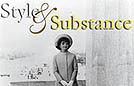 Had we come to expect "1960" to be truly ubiquitously modern in a way that the 1950s really were not--not quite? And what specifically does "modern" mean in the Kennedyesque talk then and now about the torch being passed to a new generation, etc.? The First Lady really meant "modernist" when Camelotians said "modern." What about the others across the new young cultural leadership? I've been surprised by how frequently the
  "Beat movement" was covered in 1960 in the mainstream press. I was expecting a fair measure but I've found tonnage. 1960 was the year when the figure of the beat was beginning to find acceptance, although still 80% of these stories are mocking, rebels-without-cause condescension. For anyone whose analysis made an impact nationally, do these antipolitical adolescents count as part of the "new young cultural leadership"? No, but rather than the two being opposites, they fall along a Continuum of the New American. Now that's a change for '60.