In the same issue of the New Left Review where I found the Clancy Sigal statement I've mentioned earlier, I read P.V. Ableman's review of Nabokov's Lolita. Although New Left Review was independent-left more than predictable communist-left, I was still expecting fairly straightforward condemnation of its unreality. Ableman writes very interestingly about this novel.
 (I'm not sure why the journal published a review in 1960 of a novel first published in 1955. Perhaps the Weidenfeld and Nicholson edition mentioned atop the review was a new edition of some sort.)
First, authenticity does not at all depend on realism, and indeed might be necessitated by a break from the tools of the real. "What a potent feeling of authenticity is gradually generated by this book, which never seriously attempts to establish a single, conventionalised relationship with reality...."
Second: we might have a healthy start-again post-modernism here, and for a left lit critic this might be a way around or at least past the critique of modernism. "The machinery of Lolita is sometimes preposterous and never (to appropriate the adjective used for the adolescent heroine's underclothes) more than perfunctory. It is as if the narrative conventions of the European novel having finally broken down, analysed out of existence, perhaps, by Joyce, Nabokov has cheerfully started again from scratch." And more: "...it is late in the day to begin at the beginning" but in this book we may indeed have found" the authentic quality of 20th century life emerging."


 Is '60 the moment when the end of the end of the Old Left had been reached and the New Left began to emerge? Is it the final ascendancy, in certain scenes at least, of poetic postmodernity? Surely the publication of Donald Allen's The New American Poetry that year suggests this, but then again--once again--we look back on "New" here and see continuity. The rhetoric of the Kennedy-Nixon contest made much less of a dent than everyone (at the time as well as since) claimed, so one wonders why were such great claims made?
 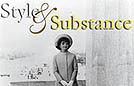 Had we come to expect "1960" to be truly ubiquitously modern in a way that the 1950s really were not--not quite? And what specifically does "modern" mean in the Kennedyesque talk then and now about the torch being passed to a new generation, etc.? The First Lady really meant "modernist" when Camelotians said "modern." What about the others across the new young cultural leadership? I've been surprised by how frequently the
  "Beat movement" was covered in 1960 in the mainstream press. I was expecting a fair measure but I've found tonnage. 1960 was the year when the figure of the beat was beginning to find acceptance, although still 80% of these stories are mocking, rebels-without-cause condescension. For anyone whose analysis made an impact nationally, do these antipolitical adolescents count as part of the "new young cultural leadership"? No, but rather than the two being opposites, they fall along a Continuum of the New American. Now that's a change for '60.