1960 was a very bad year for Kenneth Patchen. While he was hospitalized in late '59 for yet another back operation, he fell from the operating cart to the floor and severely damaged his spine. He was never really without pain from then on, and he was in pain when he was lying on his back, lying on his side, sitting up or standing. He and his wife Miriam went to see a Dr. Victor Richards in February, and this man apparently responded indifferently to Patchen's report of pain, implying that Patchen was exaggerating how he felt. A little later the Patchens initiated a lawsuit against Richards--and managed, through San Fran columnist Herb Caen, to get a call and a meeting with famed defense lawyer Melvin Belli. Not much came of this, and the Patchens were destitute. Eventually, on January 29, 1961, there was a "San Francisco Tribute to Kenneth Patchen" at the Marines' Memorial Theatre. Kenneth Rexroth was the master of ceremonies and readings were given by Philip Whalen, Lawrence Ferlinghetti and others. It was a fund raiser, although few funds were realized.
 Here's the good part. Unable to work at this typewriter any longer, Patchen stopped writing conventional poems. He wrote letters and poems only in a large hand scrawl. He used pens and a paint brush. He developed his "picture poems." Miriam said later: "That's why the drawing poems and picture poems came, because he could do them relatively shortly [quickly]."
In 1960 Kenneth Patchen published Because It Is, poems-and-drawings.


 Is '60 the moment when the end of the end of the Old Left had been reached and the New Left began to emerge? Is it the final ascendancy, in certain scenes at least, of poetic postmodernity? Surely the publication of Donald Allen's The New American Poetry that year suggests this, but then again--once again--we look back on "New" here and see continuity. The rhetoric of the Kennedy-Nixon contest made much less of a dent than everyone (at the time as well as since) claimed, so one wonders why were such great claims made?
 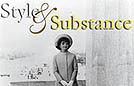 Had we come to expect "1960" to be truly ubiquitously modern in a way that the 1950s really were not--not quite? And what specifically does "modern" mean in the Kennedyesque talk then and now about the torch being passed to a new generation, etc.? The First Lady really meant "modernist" when Camelotians said "modern." What about the others across the new young cultural leadership? I've been surprised by how frequently the
  "Beat movement" was covered in 1960 in the mainstream press. I was expecting a fair measure but I've found tonnage. 1960 was the year when the figure of the beat was beginning to find acceptance, although still 80% of these stories are mocking, rebels-without-cause condescension. For anyone whose analysis made an impact nationally, do these antipolitical adolescents count as part of the "new young cultural leadership"? No, but rather than the two being opposites, they fall along a Continuum of the New American. Now that's a change for '60.